High-risk business clause | Contract risk guide
Payment Terms Risk: Risks, Examples, and How to Detect It
This guide explains payment terms risk in plain English so you can spot red flags fast - even if you're not a lawyer. Use it to scan your contract, find the wording, and know what to negotiate.
Direct answer
Payment terms dictate when money moves from the paying party to the receiving party, defining the precise timing of payments and associated costs. The risk is that payment obligations shift unexpectedly or incur high fees based on a payment structure defined by the contract. A misplaced 'payment terms' clause can lock in unfavorable pricing or introduce unexpected financial liability. This clause determines the precise cash flow timing, directly impacting the initial capital requirement and the final realized profit for both parties.
Quote
"Risk comes from not knowing what you are doing."
- Warren Buffett
Source: Investopedia
Quote
"Trust, but verify."
- Ronald Reagan
Source: Reagan Presidential Foundation & Institute
Related stats (business contracts)
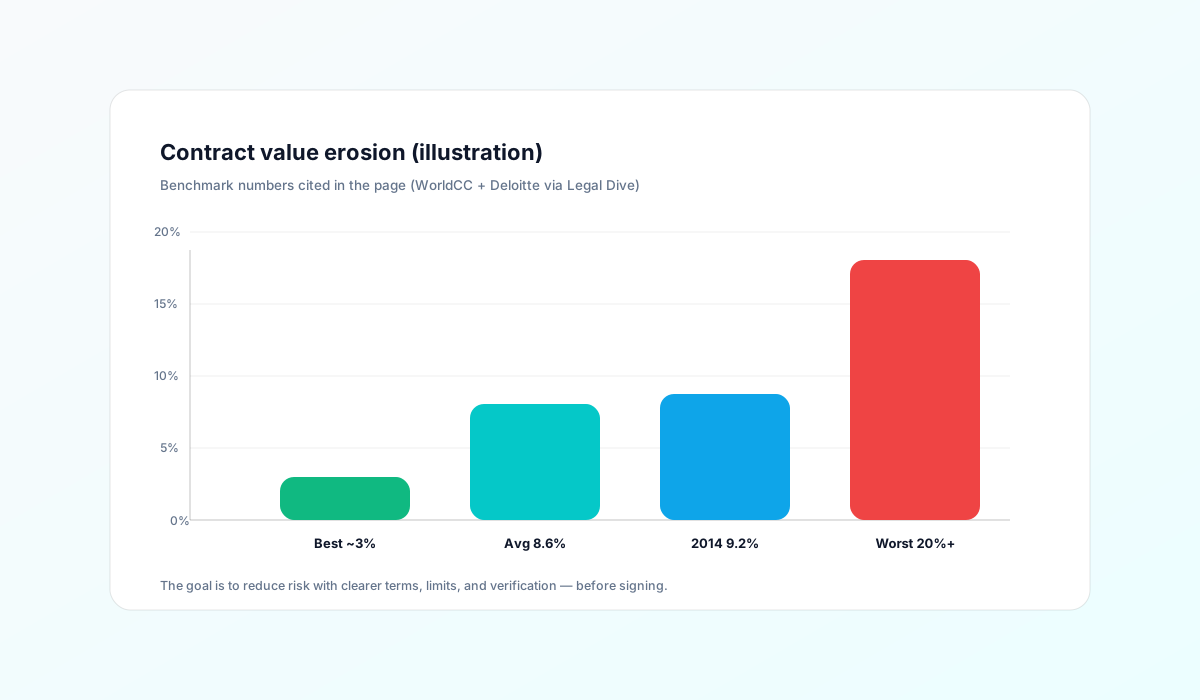
Sources: Docusign / Deloitte signals reported by TechRadar and Axios. Treat these as directional business benchmarks, not legal advice.
Why it's risky (specific outcomes)
- A $100,000 contract might trigger a $50,000 payment obligation if 'payment terms' dictate upfront fees before delivery.
- $250,000 potential liability if 'payment terms' requires fixed payment schedules.
- The difference between net-30 and net-60 payment windows dictates the actual cash outlay.
- Indemnification clause triggered by timing misalignment.
- Hereafter
- Payment schedule defined herein
- Stipulate a payment date for milestone completion.
- Grace period for payment execution
- Waiver of payment obligations
- The timing structure dictates the long-term relationship equity.
- Prepayment penalty structure
- Termination fee based on payment status
Risk detection board
Red flags to look for
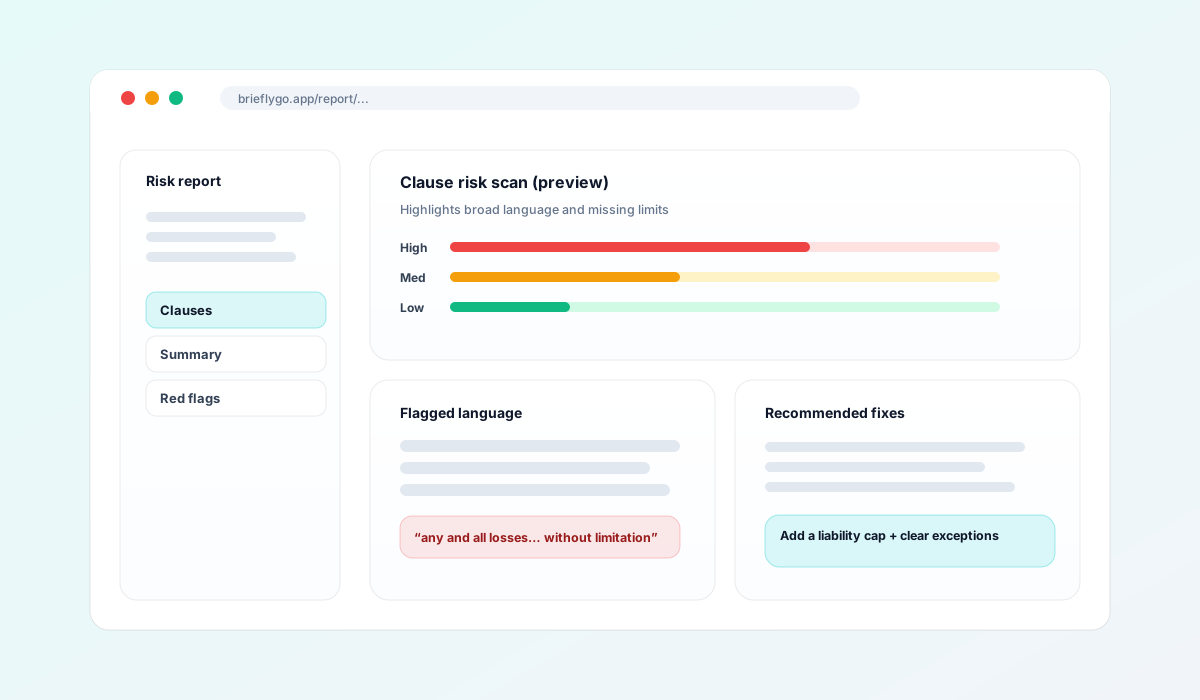
Search for these patterns first. They usually signal hidden cost, one-sided leverage, or a clause that needs a tighter limit before signing.
Late fees are stated as a % per month and can compound.
Ask for a limit, a definition, and a written notice/dispute window.
Invoices are "due upon receipt" with no dispute window.
Ask for a limit, a definition, and a written notice/dispute window.
You must pay before delivery or before acceptance.
Ask for a limit, a definition, and a written notice/dispute window.
Fees are "non-refundable" even for delays or defects.
Ask for a limit, a definition, and a written notice/dispute window.
The vendor can suspend service immediately for any non-payment.
Ask for a limit, a definition, and a written notice/dispute window.
"Administrative", "processing", or "platform" fees appear outside the price.
Ask for a limit, a definition, and a written notice/dispute window.
The contract mentions "payment terms risk" but does not say who decides or what evidence is required.
Ask for a limit, a definition, and a written notice/dispute window.
Key details are moved into attachments, such as pricing, scope, or timelines, instead of the main terms.
Ask for a limit, a definition, and a written notice/dispute window.
Scenario replay
Real example: what you can lose
A practical mini-story makes the risk easier to judge than abstract legal wording.
Potential impact
The business loses $5,000 in initial capital because the payment schedule forces an immediate cash outlay before the service officially begins.This is the kind of loss BrieflyGo tries to surface before the document moves to signing.
Who
A small business owner signing a software licensing agreement for a $50,000 initial fee.
Signed
A freelance web developer signing an agreement where the payment structure dictates that 30% of the total fee is due upon project kickoff and 70% after three months.
Trigger
The clause states 'Payment terms' require a $5,000 initial deposit within 15 days, otherwise, the rest of the contract becomes void or defaults.
Manual scan mode
How to identify it
Use this as a quick search workflow before uploading the contract or asking the other side for changes.
Where to look
Section 2 (Payment Obligations) or Exhibit A (Fee Structure).
Phrases to search
'Payment terms'due datepayment schedulenet terminitial depositinstallment dueDanger pattern
- Unspecified payment dates leading to default.
- Interest calculated on delayed payments.
- Fixed fee structure locking the deal in.
- Escrow requirement failure."], "protection_steps": ["Add: Specify a clear net-30 or net-60 payment window."
- Delete: Clause that specifies interest accrual on deferred payment.
- Replace: Define payment terms as
- Payment due upon successful completion of Milestone X
- ."
- Modify: Ensure the payment term directly aligns with the project's actual cash flow requirement.
Redline helper
Risky wording vs safer wording
"Customer shall pay all fees immediately, including any additional charges, penalties, taxes, and expenses determined by Provider."
"Customer pays only fees listed in the order form. Any disputed invoice may be withheld in good faith for 15 days while the parties resolve the dispute."
Why this helps: This keeps the price anchored to the written deal and gives both sides a clean dispute window before penalties or suspension.
Action board
How to protect yourself
Treat these as practical redline moves: narrow the language, add measurable limits, then re-check the edited document before you sign.
Change billing to milestones (pay after deliverables are accepted).
Ask for this change in writing, then verify the final PDF matches the negotiated wording.
Add a written dispute window before late fees apply (e.g., 15 days).
Ask for this change in writing, then verify the final PDF matches the negotiated wording.
Ban suspension during a good-faith dispute.
Ask for this change in writing, then verify the final PDF matches the negotiated wording.
Negotiate: ask for a narrower scope and clear definitions.
Ask for this change in writing, then verify the final PDF matches the negotiated wording.
Knowledge graph
Legal terms and document paths connected to Payment Terms Risk
This connected layer helps readers and answer engines move from the risky clause itself to nearby glossary explanations and document workflows where the same pressure shows up again.
Upload your contract and detect payment & billing risks instantly using AI.
BrieflyGo scans contracts and highlights risky wording in plain English so you can decide what to accept, what to negotiate, and what to avoid.
No legal jargon overload. Fast scan. Clear red flags.
FAQ
Is this type of clause legal?
Often yes - but legality depends on your location, the exact wording, and the context. Even a legal clause can still be a bad deal for you.
Can it be changed in the draft?
Yes, many clauses can be removed or narrowed. If the other side won't remove it, ask for limits, exceptions, or a trade-off (price, term, scope).
Who benefits from it?
Usually the party with more power in the negotiation. The clause often shifts risk away from them and onto you, especially when it's broad or one-sided.
When does it become dangerous?
When it's broad, has no clear limits, applies after termination, or is tied to large money. It's also risky when the contract has vague definitions or hidden cross-references.