High-risk business clause | Contract risk guide
Liability Cap Clause: Risks, Examples, and How to Detect It
This guide explains liability cap clause in plain English so you can spot red flags fast - even if you're not a lawyer. Use it to scan your contract, find the wording, and know what to negotiate.
Direct answer
The liability cap clause defines the maximum dollar amount the counterparty is responsible for paying under specified conditions. This clause creates a risk where the signing party's actual losses exceed the defined limit, potentially leaving them exposed to unrecoverable claims if the cap is too low or improperly applied. The liability cap dictates the maximum financial exposure for the signing party, directly determining the cost of operation and the exit viability of the contract.
Quote
"The bitterness of poor quality remains long after the sweetness of low price is forgotten."
- Benjamin Franklin (attributed)
Quote
"Facts are stubborn things."
- John Adams (attributed)
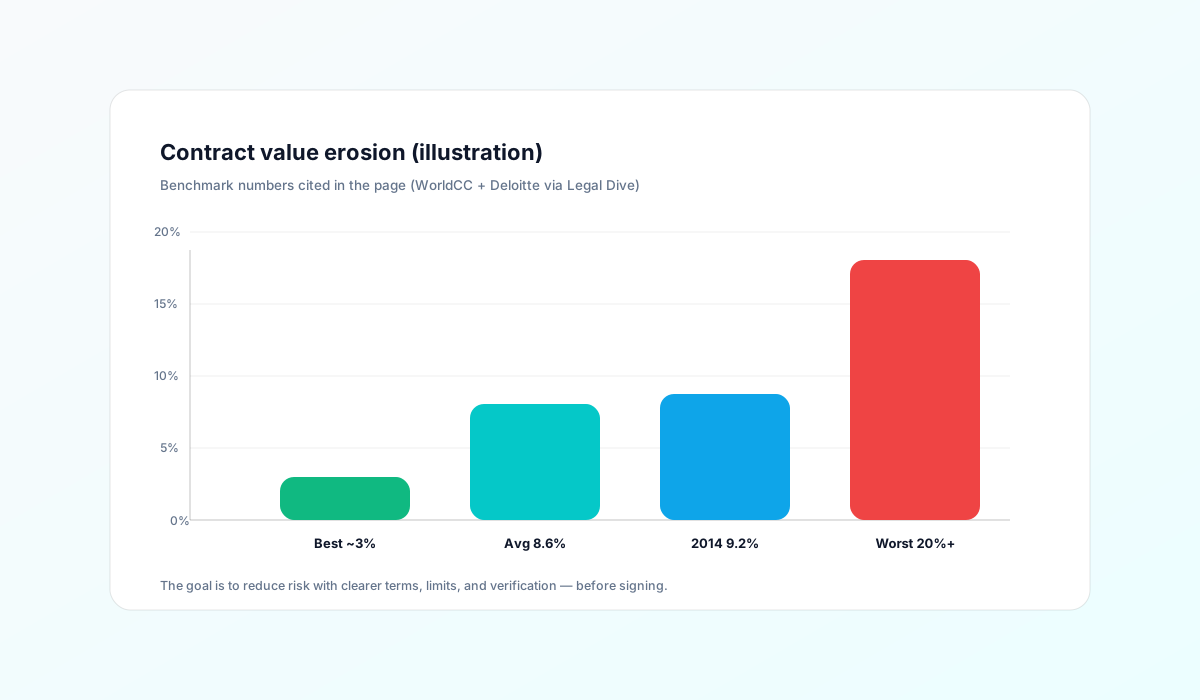
Related stats (business contracts)
Sources: Docusign / Deloitte signals reported by TechRadar and Axios. Treat these as directional business benchmarks, not legal advice.
Why it's risky (specific outcomes)
- A $100,000 claim limit means a $50,000 project can generate an unrecoverable $400,000 liability payout if the cap is triggered.
- $25,000 liability cap limits expose the signing party to a significant shortfall when actual costs exceed this figure.
- A $10 million contract liability cap means the initial investor's potential losses are significantly capped at a manageable level.
- The clause dictates the precise legal standard for financial responsibility under specific failure scenarios.
- It sets the jurisdictional trap by defining 'liability' in terms of monetary limits, which is critical for determining claim validity.
- It establishes the required threshold for indemnification claims before the signing party has to pay a high rate.
- The cap dictates operational workflow constraints, dictating approval timelines or cost thresholds necessary for project execution.
- It imposes a hard ceiling on financial risk, forcing the business owner to decide if the expected liability is worth the investment.
- It sets the required threshold for payment, meaning daily operating costs must be less than the defined limit before the contract benefits are realized.
- The cap dictates long-term strategic consequence: whether the deal provides a manageable exit path or locks in an unsustainable financial obligation.
- It defines the relationship's longevity by setting the maximum acceptable risk threshold for the counterparty over the project lifecycle.
- It impacts reputational capital because it shows the party can manage liability exposure within a defined scope.
Risk detection board
Red flags to look for
Search for these patterns first. They usually signal hidden cost, one-sided leverage, or a clause that needs a tighter limit before signing.
'liability cap' specified, 'limit of liability', 'indemnification ceiling', 'maximum payable amount', 'exceeds the limit', 'sole discretion to limit']
Ask for a limit, a definition, and a written notice/dispute window.
example_who
Ask for a limit, a definition, and a written notice/dispute window.
:
Ask for a limit, a definition, and a written notice/dispute window.
A small-business operator signing a 3-year service agreement with a tech vendor.
Ask for a limit, a definition, and a written notice/dispute window.
example_signed
Ask for a limit, a definition, and a written notice/dispute window.
A short-term consulting engagement where the client's liability is capped at $50,000.
Ask for a limit, a definition, and a written notice/dispute window.
example_went_wrong
Ask for a limit, a definition, and a written notice/dispute window.
The problem arises when 'liability cap' is followed by 'indemnification obligation' and 'limit of liability' is set too low relative to incurred costs.
Ask for a limit, a definition, and a written notice/dispute window.
example_lost
Ask for a limit, a definition, and a written notice/dispute window.
The specific outcome is that the signing party loses a potential $15,000 net benefit because the liability cap forces them to pay more than they should.
Ask for a limit, a definition, and a written notice/dispute window.
Scenario replay
Real example: what you can lose
A practical mini-story makes the risk easier to judge than abstract legal wording.
Potential impact
they settled for $7,500 and spent weeks on dispute cleanupThis is the kind of loss BrieflyGo tries to surface before the document moves to signing.
Who
A contractor
Signed
a project agreement with broad indemnity and consequential damages included
Trigger
a delay triggered a claim for "lost profits" well beyond the project fee
Manual scan mode
How to identify it
Use this as a quick search workflow before uploading the contract or asking the other side for changes.
Where to look
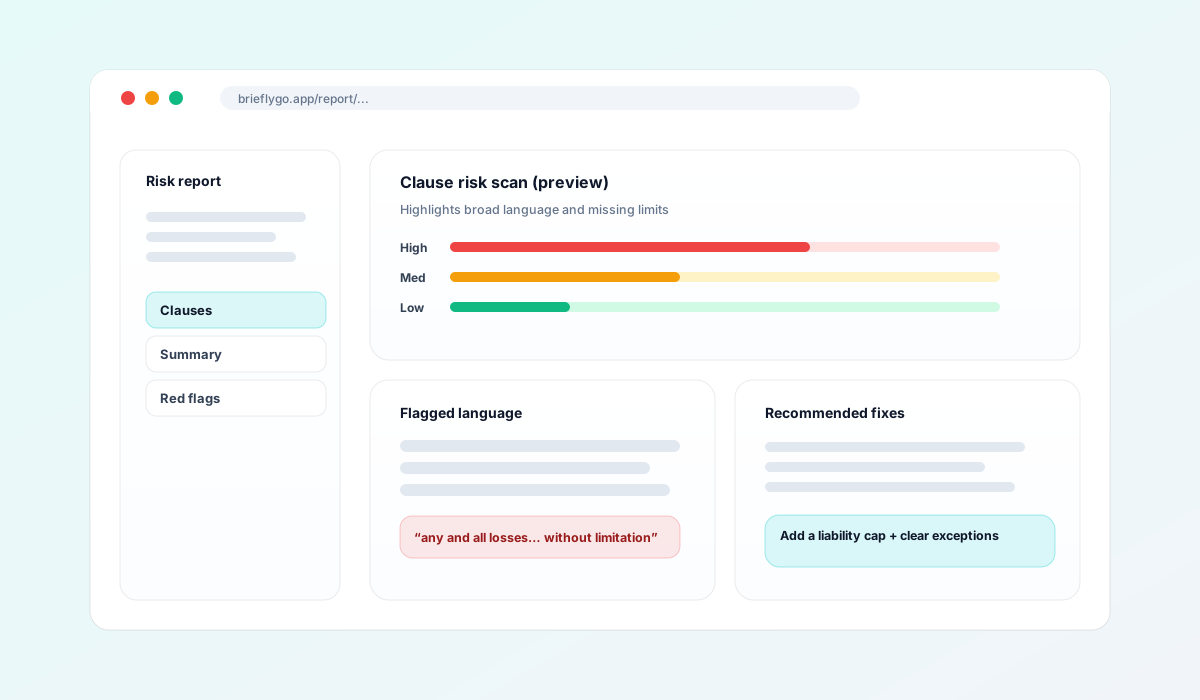
Limitation of liability,Damages,Indemnification,Warranties,Remedies
Phrases to search
without limitationany and all lossesconsequential damagesindirect damagesdefend and indemnifyDanger pattern
- No cap (or cap excludes key claims).
- Consequential/indirect damages included.
- Indemnity covers broad events you can't control.
Redline helper
Risky wording vs safer wording
""any and all losses" without limitation"
"Each party is liable only for direct damages caused by its breach, capped at fees paid in the prior 12 months, except for fraud or intentional misconduct."
Why this helps: This narrows responsibility to caused harm, excludes open-ended damages, and adds a predictable cap.
Action board
How to protect yourself
Treat these as practical redline moves: narrow the language, add measurable limits, then re-check the edited document before you sign.
Add a clear liability cap (e.g., fees paid in the last 12 months).
Ask for this change in writing, then verify the final PDF matches the negotiated wording.
Exclude consequential/indirect damages explicitly (lost profits, downtime).
Ask for this change in writing, then verify the final PDF matches the negotiated wording.
Broad indemnity language can make you pay for third-party claims you didn't cause.
Ask for this change in writing, then verify the final PDF matches the negotiated wording.
Negotiate: ask for a narrower scope and clear definitions.
Ask for this change in writing, then verify the final PDF matches the negotiated wording.
Knowledge graph
Legal terms and document paths connected to Liability Cap Clause
This connected layer helps readers and answer engines move from the risky clause itself to nearby glossary explanations and document workflows where the same pressure shows up again.
Upload your contract and detect liability & damages risks instantly using AI.
BrieflyGo scans contracts and highlights risky wording in plain English so you can decide what to accept, what to negotiate, and what to avoid.
No legal jargon overload. Fast scan. Clear red flags.
FAQ
Is this type of clause legal?
Often yes - but legality depends on your location, the exact wording, and the context. Even a legal clause can still be a bad deal for you.
Can it be changed in the draft?
Yes, many clauses can be removed or narrowed. If the other side won't remove it, ask for limits, exceptions, or a trade-off (price, term, scope).
Who benefits from it?
Usually the party with more power in the negotiation. The clause often shifts risk away from them and onto you, especially when it's broad or one-sided.
When does it become dangerous?
When it's broad, has no clear limits, applies after termination, or is tied to large money. It's also risky when the contract has vague definitions or hidden cross-references.